Arrival of the Europeans

The colonial story of Bathurst begins with the search for what lay beyond the rugged Blue Mountains – a formidable natural barrier that hemmed in the colonists. For years, settlers gazed westward, wondering what lands lay beyond the mountain wall.

In May 1813, three determined men – Gregory Blaxland, William Lawson, and William Charles Wentworth – set out from the Nepean River with a small party of convicts, provisions, and livestock. Their aim was simple yet daring: to find a route through the mountains. After twenty-one arduous days of hacking through dense bushland, navigating steep ridges, and enduring bitter cold, they stood on the western escarpment and gazed upon the vast Bathurst Plains – open grasslands stretching as far as the eye could see. This moment marked one of the great turning points in Australia’s colonial history.
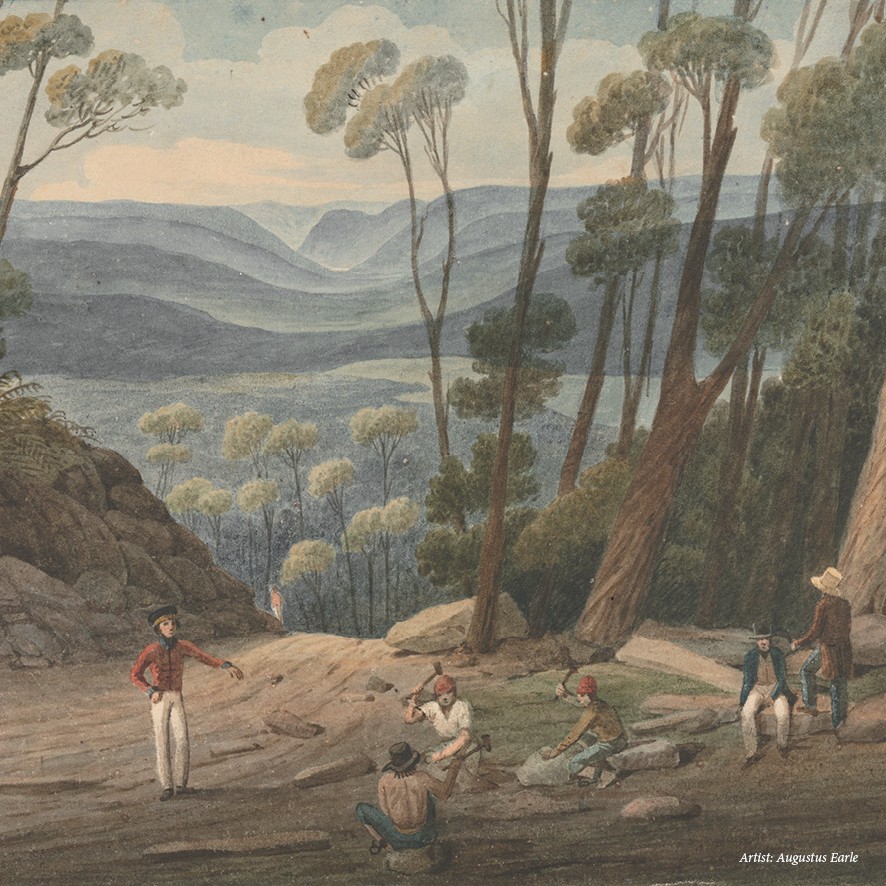
The watercolour by colonial artist Augustus Earle depicts the building of the road to Bathurst at Mount York. State Library NSW
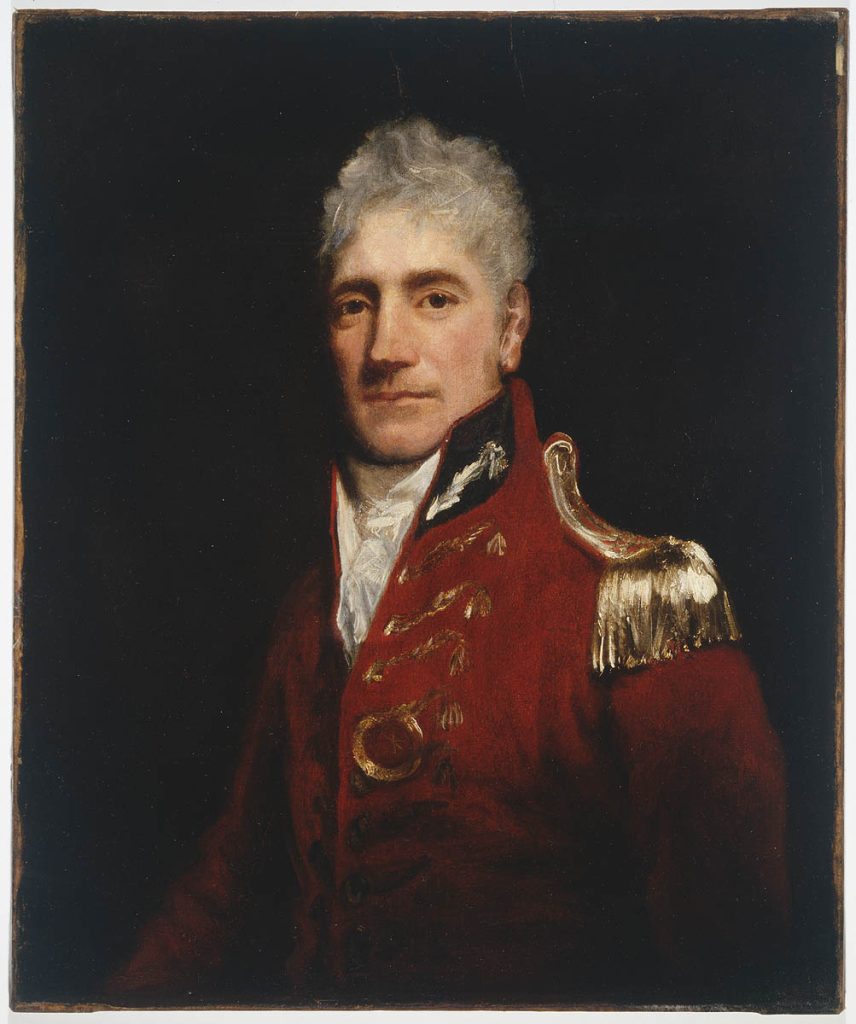
Governor Lachlan Macquarie State Library NSW
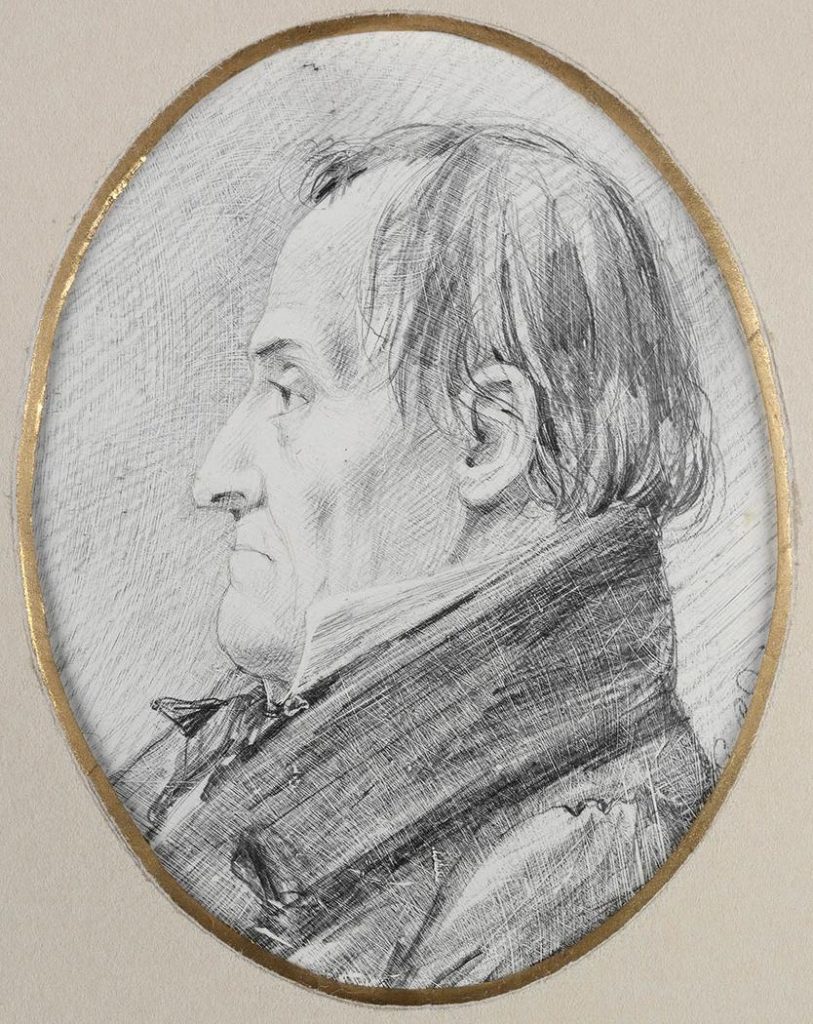
George Evans State Library NSW
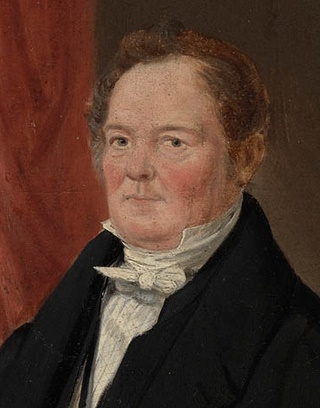
William Cox State Library NSW[

Soon after, Surveyor George Evans was sent by Governor Lachlan Macquarie to confirm and chart the explorers’ route. Evans became the first European to descend into and explore the Bathurst Plains, recording with excitement the fertile soils and gentle rivers. He named the main river the Macquarie, in honour of the Governor.

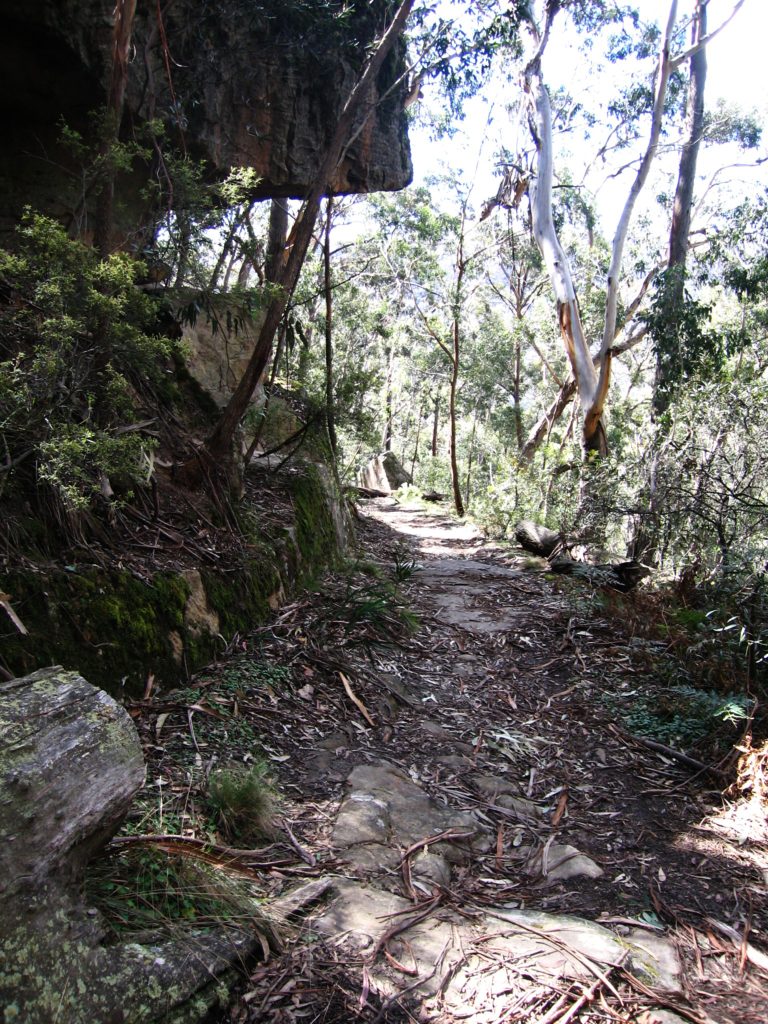
Part of the descent of Cox’s Road at Mt York
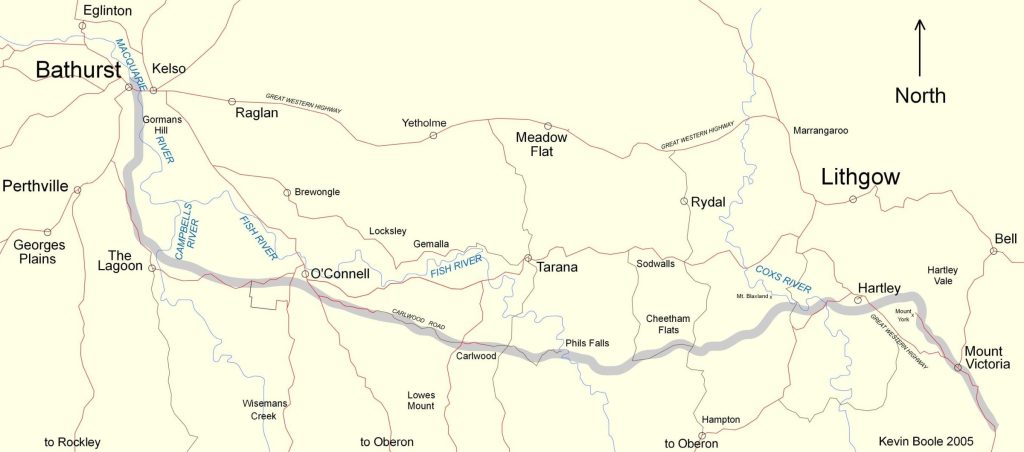
Coxs Road completed 1815 - Mount York to Bathurst

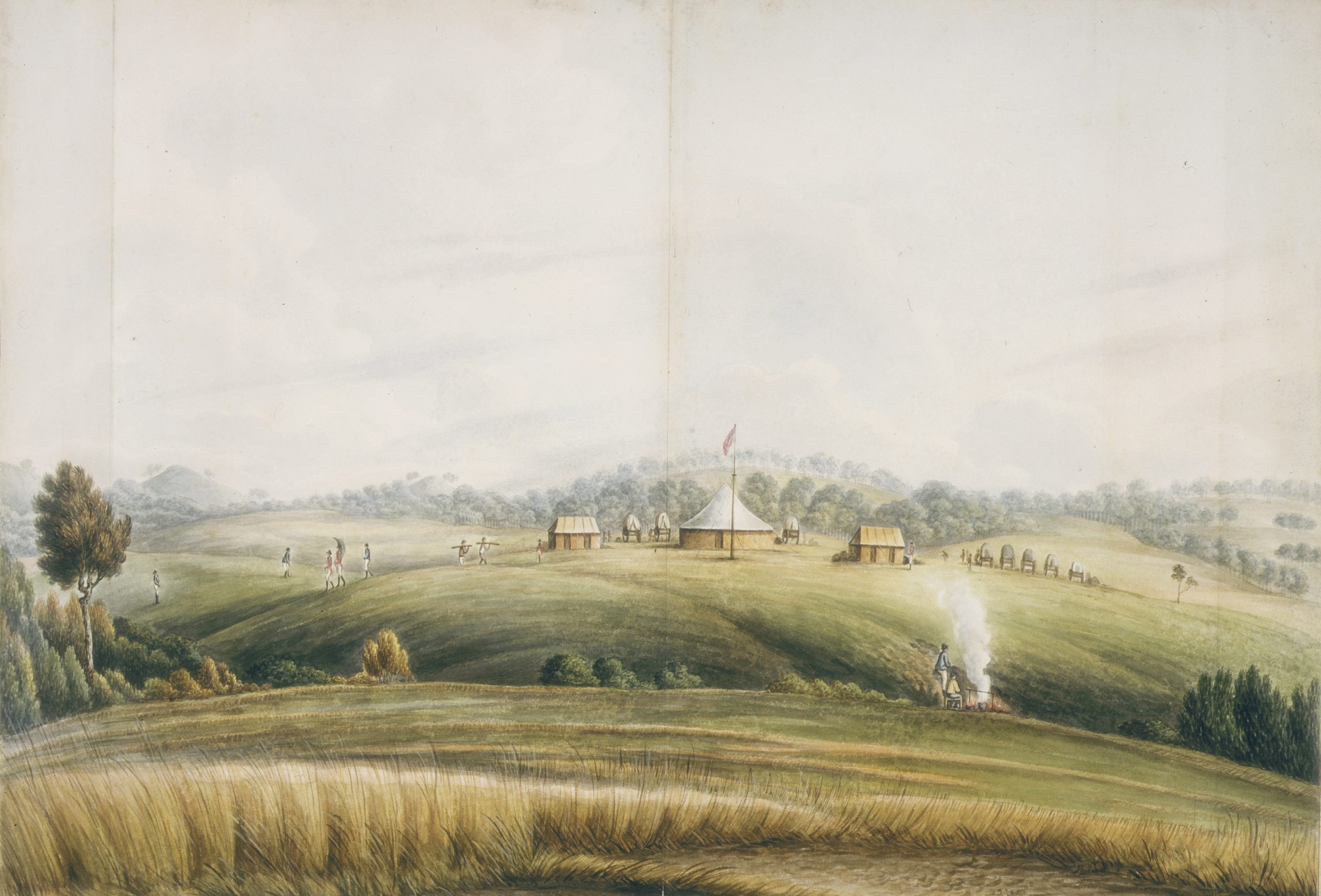
In May 1815, Governor Macquarie himself journeyed along the new road and officially proclaimed the site of Bathurst, Australia’s first inland European settlement. He named it in honour of Henry Bathurst, the British Secretary of State for War and the Colonies.

1815 – The Flagstaff on the Macquarie (Wambuul) River Bank Artist, John W. Lewin, with Governor Macquarie to Bathurst.

At first, Bathurst served as a government depot – a small, strategic outpost for managing livestock and convicts, and for expanding pastoral settlement across Wiradyuri Country.


Convict labour played a vital role in shaping early Bathurst. The Government established a convict depot and military barracks, from which roads, bridges, and public buildings were constructed. By the 1820s, Bathurst had become a centre of agricultural expansion and a key link in the growing network of inland exploration.

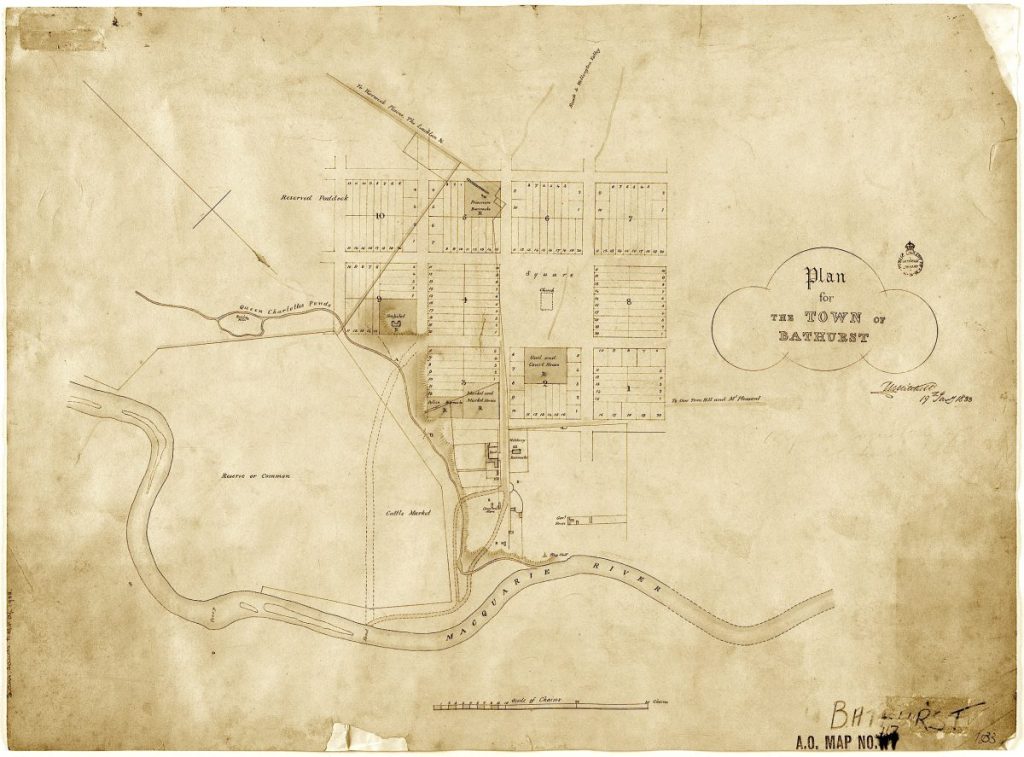
As the settlement grew, order was imposed through planning.

 Mitchell’s 1833  township plan laid out streets in a neat grid beside the Macquarie River – the same pattern that defines central Bathurst today.

What began as a remote government outpost soon became a thriving inland town, a symbol of colonial ambition and endurance. Yet, the establishment of Bathurst also marked the beginning of dispossession of  Wiradyuri people from their land and Country and the resources they relied on.  Their deep connection to this land stretched back tens of thousands of years.

Today, Bathurst stands as a place where stories of exploration, resilience, and cultural connection continue to meet – the heart of inland Australia’s earliest European beginnings.