Wealth from Minerals and the Land
Nestled in the heart of inland New South Wales, the Bathurst region is a place where Australia’s early prosperity was forged from minerals and the land. Set against the rolling tablelands beyond the Blue Mountains, Bathurst’s story is one of ambition, enterprise and enduring architectural beauty, is an unfolding narrative that transformed a frontier settlement into one of the state’s most significant regional cities.
The discovery of gold in the 1850s reshaped the district forever. Nearby goldfields such as those at Sofala and Hill End drew thousands of hopeful prospectors, entrepreneurs and merchants to the region.
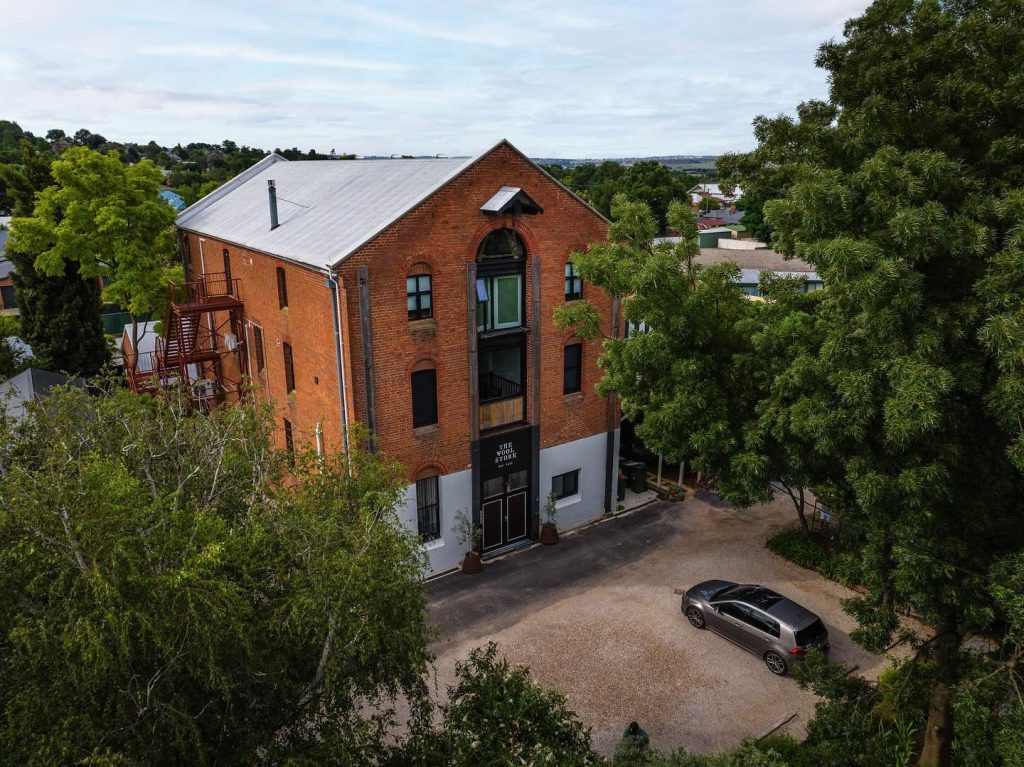
Wealth flowed rapidly, not only from mining but also from the rich pastoral lands that had already begun to sustain a thriving agricultural economy. Fine merino wool, livestock and grain production reinforced Bathurst’s position as a centre of rural prosperity. Together, minerals and agriculture created a powerful economic foundation that would shape the region’s character for generations.
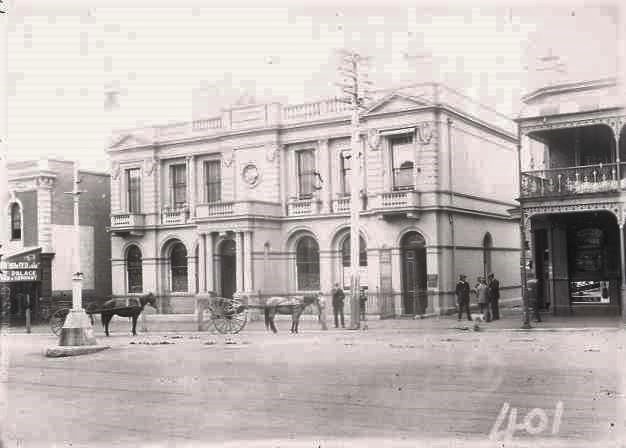
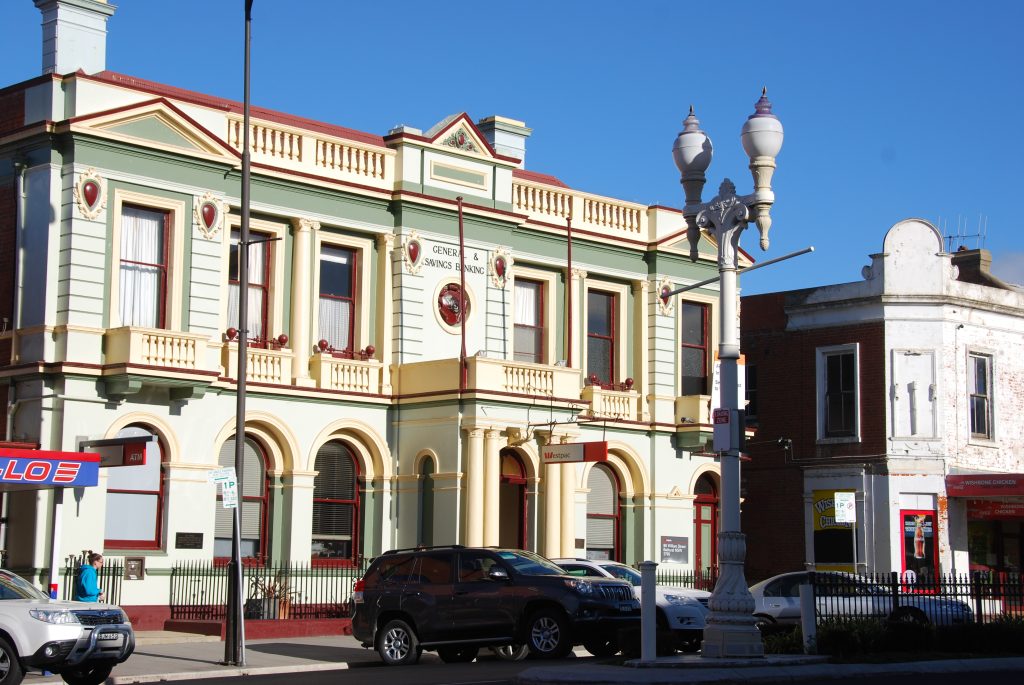
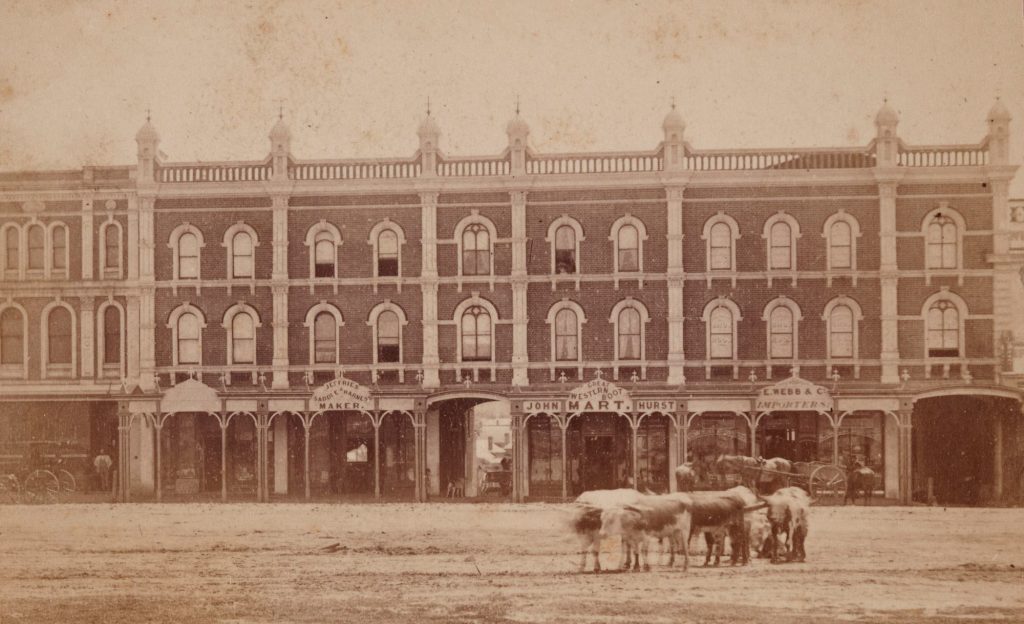
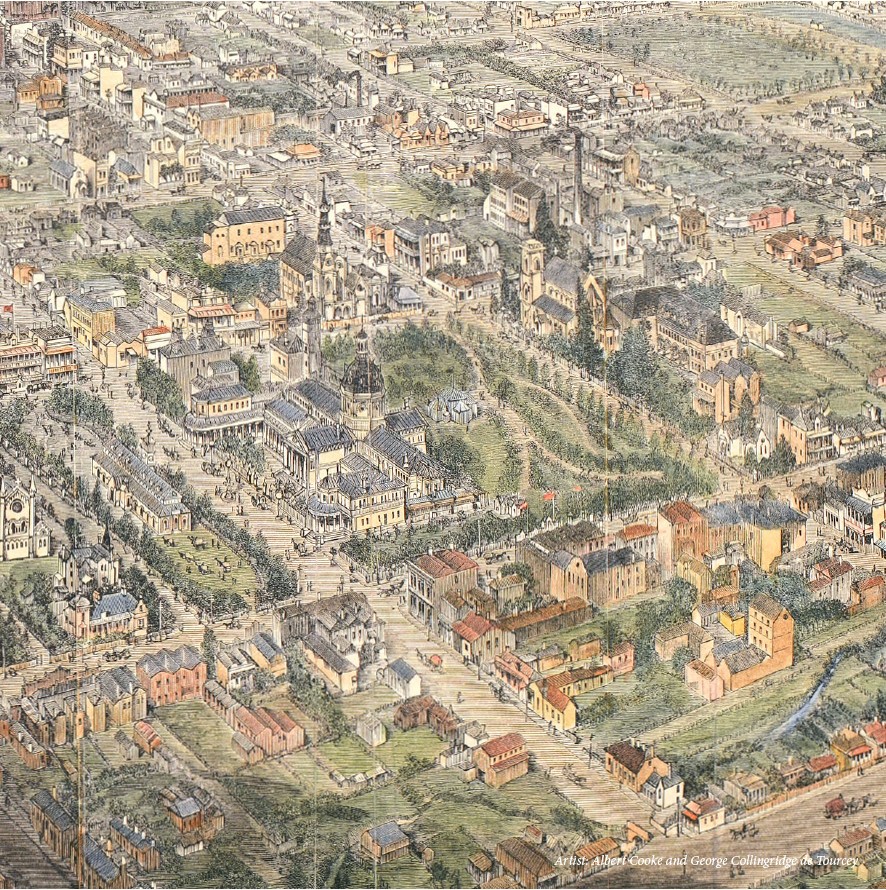
In the second half of the 19th century, this prosperity was visibly etched into the town’s streetscape. Bathurst emerged as a showcase of Victorian confidence, its skyline adorned with grand civic buildings, elegant churches, refined commercial premises and stately private residences. Substantial banks signalled financial stability, offering reliable services that underpinned business growth and personal fortunes alike.
The architecture of this era, much of which still stands, reflects the optimism of a community certain of its future. Wide streets, ornate façades and dignified public institutions proclaimed that Bathurst was no longer a frontier outpost, but a maturing urban centre.
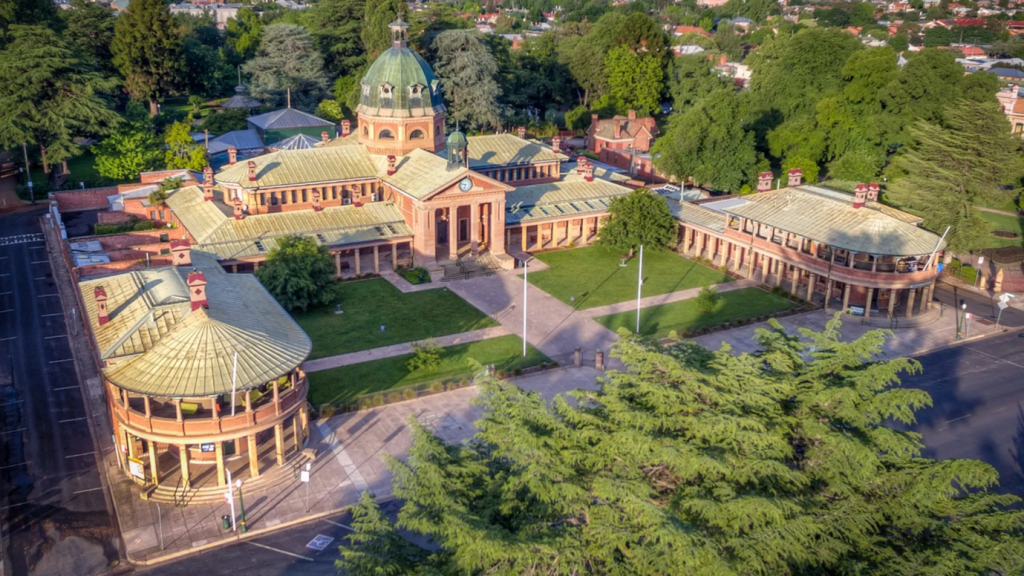
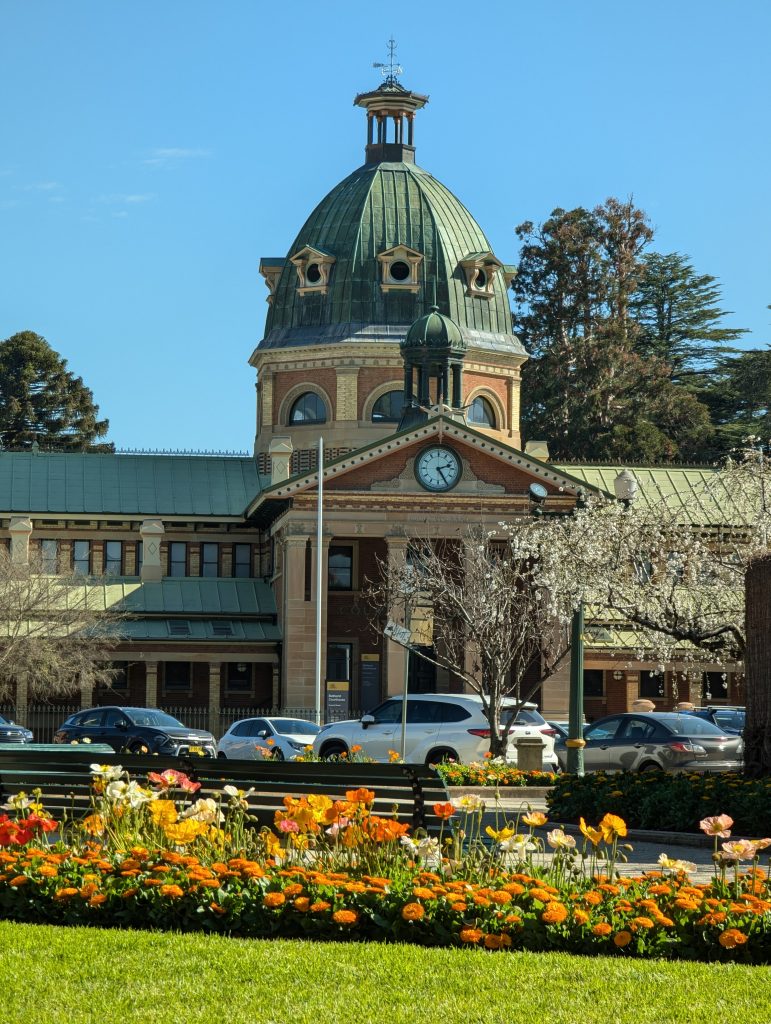
The National Trust listed Bathurst Courthouse is one of Australia’s best examples of Victorian era public architecture in NSW. Designed by James Barnet. It was opened in1880 and is situated in the heart of the city. It is listed by the National Trust and was designed by James Barnet. The east wing now houses the Bathurst and District Historical Society Museum.
Civic pride culminated in 1885 when Bathurst was officially declared a city, one of the earliest inland settlements in New South Wales to receive this honour. The establishment of the first Council formalised local governance and demonstrated the region’s growing sophistication. Decision-making shifted from distant authorities to community leaders who shaped infrastructure, public amenities and urban planning. It was an era of structured progress, civic ambition and long-term vision.
llustrated Sydney News 10 October 1891
The principal thoroughfares are George and William Streets, both of which are lined on either side with fine buildings, utilised as stores, offices, shops, hotels, halls, churches…
Since June,1872, the city has been lighted by gas. The waterworks, which were commenced in 1888, have been completed.
Within this climate of opportunity, prominent families established enduring dynasties. Pastoralists, merchants, bankers and civic leaders accumulated significant wealth and influence. Their legacies can still be traced in historic homes and the institutions that continue to serve the community.
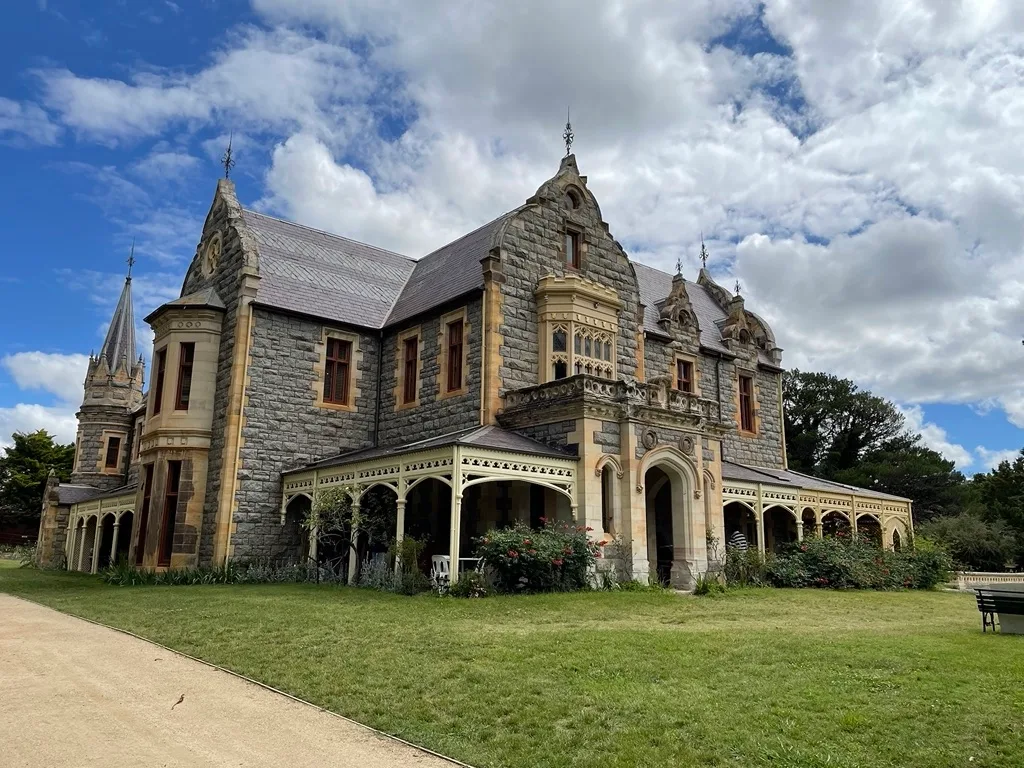
Abercrombie House was built in the 1970’s by the Stewart family. It a is a heritage treasure of NSW set in stunning grounds at Stewarts Mount just west of Bathurst. A land grant was given to William Stewart in 1827 of 3,000 acres. He later purchased an adjoining 12,000 acres.
Today, the Bathurst region invites visitors to walk through this remarkable chapter of Australian history. From the gracious streetscapes of the city centre to the atmospheric remnants of nearby gold towns, the past is ever-present.
Bathurst’s heritage is not simply preserved, it is lived. The wealth created in the 19th century shaped a community defined by resilience, civic pride and architectural distinction. For heritage travellers, the region offers a rare opportunity to experience the grandeur of a gold-era city whose foundations were built on both the riches beneath the earth and the bounty of the land above it.