In Memory of the Fallen
Bathurst offers visitors a fascinating window into Australia’s military history, with connections spanning from the late 19th century through the World Wars, Korea, Vietnam and other theatres of war. The city’s stories reveal both national significance and the experiences of a regional community, making it a unique destination for heritage tourism.
The city contributed to the 1884 New South Wales Sudan
Contingent, with memorabilia preserved at the Bathurst District Historical
Museum. Bathurst was also the birthplace of Peter Hancock, famously tried and
executed alongside Breaker Morant, whose story is commemorated in the Boer War
Memorial unveiled by Field Marshal Kitchener in 1910.
During World War One, Bathurst played a key role in recruitment efforts, hosting and witnessing several recruitment marches, including the iconic 1915 Cooee March. The Bathurst Showgrounds were transformed into a temporary military camp, marked today with a commemorative plaque.
RECRUITMENT ROUTE MARCHES
On October 28th 1915, the “Coo-ee” marchers led by Bill Hitchen of Gilgandra camped here overnight whilst on their way to Sydney.
On February 3rd 1916 the “Kookaburras” terminated their march from Tooraweenah with 93 recruits.
On February 5th 1916 the “Boomerangs” “terminated their march here having come via Cowra from Parkes with 202 recruits.
World War Two had an even deeper impact on Bathurst. Volunteer organisations, such as the Voluntary Aid Detachment and Volunteer Defence Corps, were formed, while civilian buildings—including Marsden School—were requisitioned for military use. Enemy aliens were interned in Bathurst Gaol, highlighting the far-reaching effects of war on the local community.
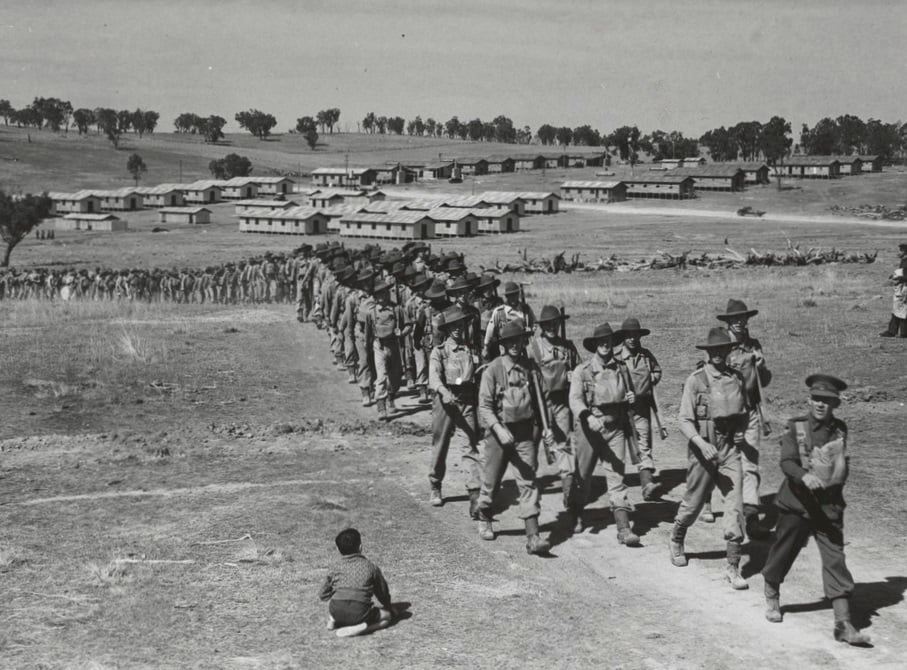
In 1940, a military training camp was established on Limekilns Road, this camp was originally built to accommodate the 1st Armoured Division A.I.F., but it was later decided that it would become an infantry training centre. Many units were trained in Bathurst before being sent overseas to Singapore, the Middle East and New Guinea.
The city also hosted an Australian Defence Industry munitions factory from 1942, with buildings on Blayney Road and worker housing still in use today. Bathurst prepared for air attack with backyard shelters, while the airport at Raglan and possible surrounding dispersal airfields underline the city’s strategic wartime role. Scots School even relocated to Bathurst to avoid the threat of Japanese attacks on Sydney.
Bathurst’s wartime story is enriched by its people.
Charles Bean was an Australian journalist and historian. He was best known as the official World War I correspondent and author of the Official History of Australia in the War of 1914-1918, shaping national remembrance of the ANZAC experience. Bean was instrumental in the establishment of the Australian War Memorial.
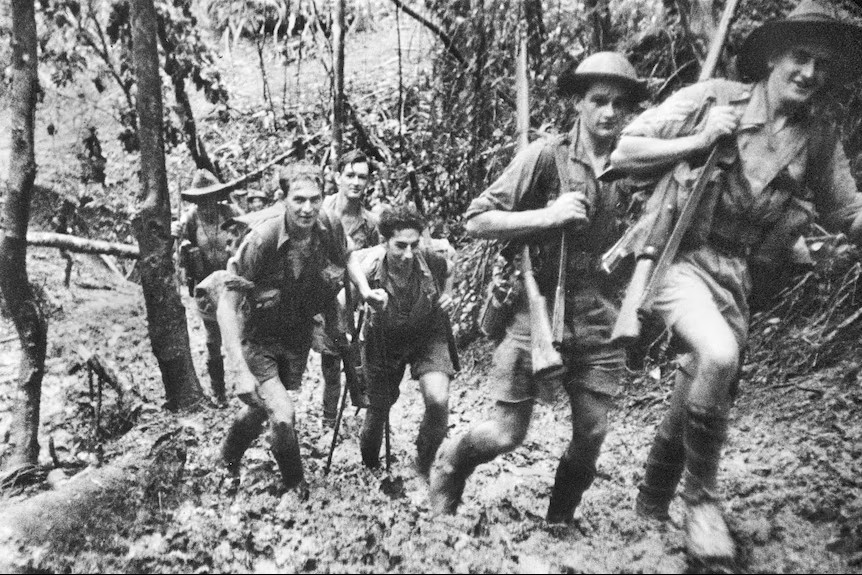
Damien Parer was an acclaimed Australian war cameraman and journalist, born in Bathurst. He gained fame for frontline WWII footage, especially in New Guinea, and won an Academy Award for his documentary work before being killed in action in 1944.
Blair Anderson Wark was a Bathurst-born Australian Army officer awarded the Victoria Cross for bravery in 1918 when, over a three-day period, he “displayed the greatest courage, skilful leading and devotion to duty” that earned him the Victoria Cross. A World War I hero, he also received the Distinguished Service Order and is commemorated locally in Bathurst.

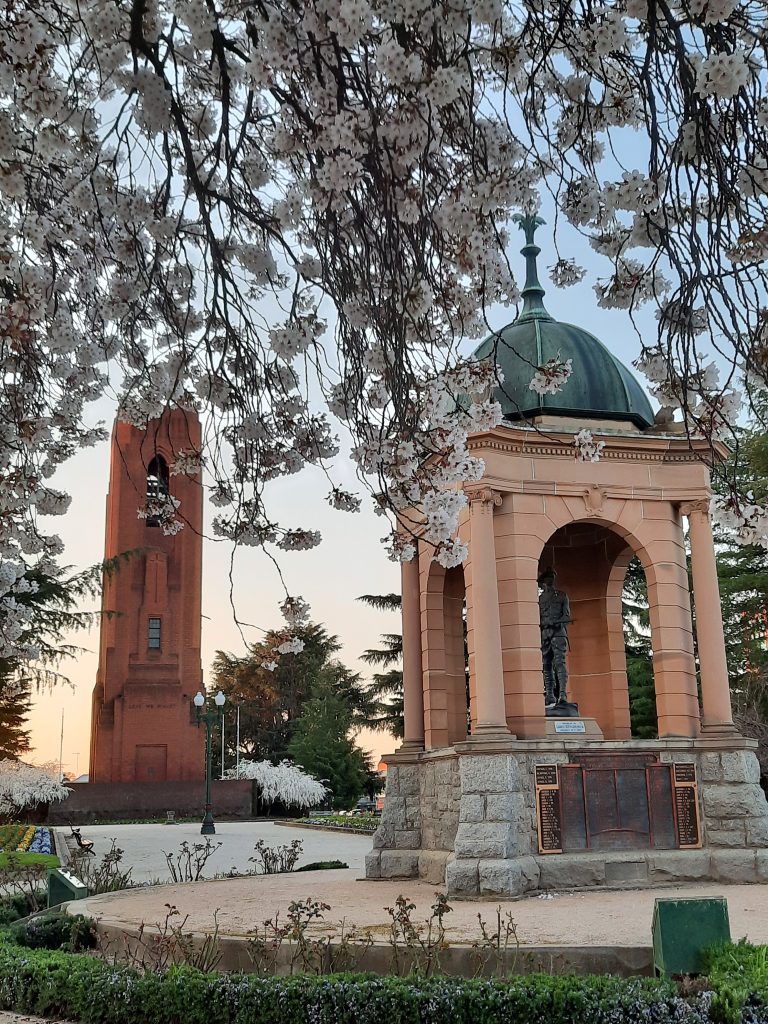
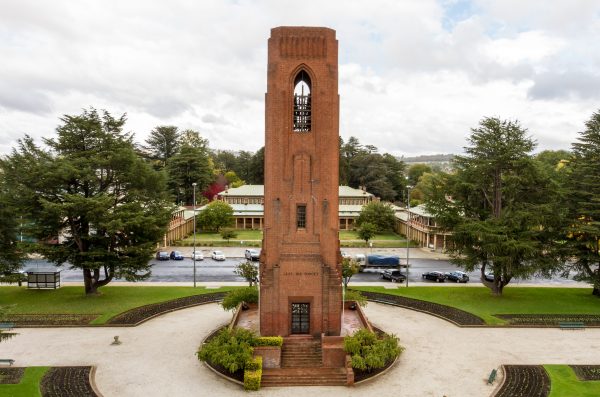
Memorials and monuments throughout the city keep this history alive. The War Memorial Carillon in King’s Parade, built in 1933 through Depression-era public subscriptions, is Bathurst’s most recognised symbol of remembrance.
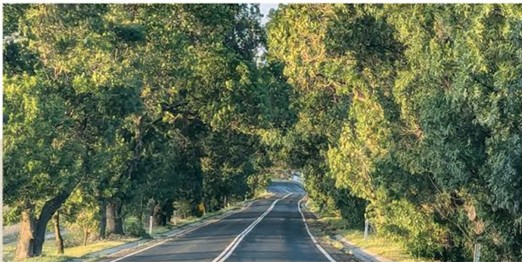
Other memorials, from honour boards to plaques and monuments, can be found in schools, churches, parks, and villages such as Rockley and Hill End. Notable highlights include the O’Connell Anzac Memorial Avenue, the 54th Battalion colours at All Saints’ Anglican Cathedral a WWI German field gun, and the memorials at the WWII Limekilns Road camp.
Visitors to Bathurst can explore a rich heritage landscape that tells the story of courage, service, and remembrance. From Boer War connections to Second World War developments, the city offers an authentic glimpse into Australia’s military past and the enduring legacy of a community shaped by conflict. Walking Bathurst’s streets, visiting its museums, and seeing its memorials allows a deep connection to the people and events that defined the nation.