Exploring the Interior

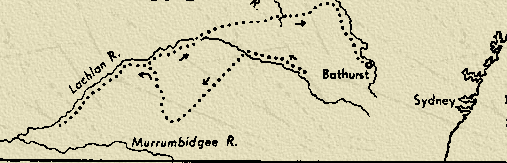
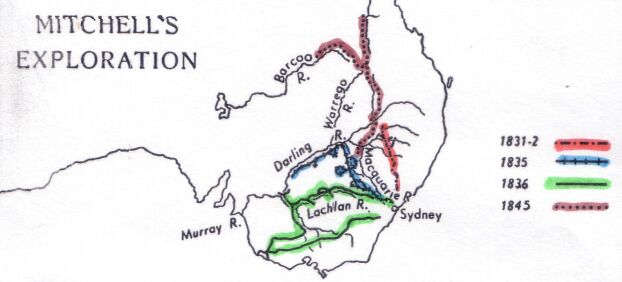
The image illustrating this theme is a map which a few decades ago would have hung in every public school classroom in NSW.

In the story of European exploration beyond the Blue Mountains, no place looms larger than Bathurst. Proclaimed in 1815 as the colony’s first inland European settlement Bathurst became the vital “launch point” from which explorers, surveyors and settlers pushed into the vast interior of New South Wales.

The breakthrough had come just two years earlier. In 1813, Gregory Blaxland, William Lawson and William Charles Wentworth found a route across the Blue Mountains’ rugged sandstone ridges. Their success overturned decades of frustration for the Sydney colony. Surveyor George Evans soon ventured beyond the mountains and reported favourably on the rolling plains watered by the Macquarie River.

On Monday 6 December 1813 George Evans reported in his diary:

I came on a fine Plain of rich Land, the hansomest Country I ever saw; ….this place is worth speaking of as good and beautiful;  the Track of clear land occupies about a Mile on each side of the River.

I have named it after the Lieut Governor, ‘O’Connell Plains’… the Timber around is thinly scatter.  I do not suppose there are more than ten Gum Trees on an Acre…… the soil is exceeding rich and produces the finest grass intermixed with variety of herbs,  the hills have the look of a park and Grounds laid out,  I am at a loss for language to describe the Country, I named this part ‘Macquarie Plains’.

Surveyor George Evans

Recognising the strategic importance of this new country, Governor Lachlan Macquarie commissioned a road across the mountains, built in 1814–15 by William Cox and a convict workforce.

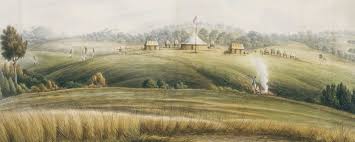
At journey’s end, Macquarie proclaimed the settlement of Bathurst, naming it after the British Secretary of State for War and the Colonies. From this modest administrative outpost grew the inland gateway of European exploration.

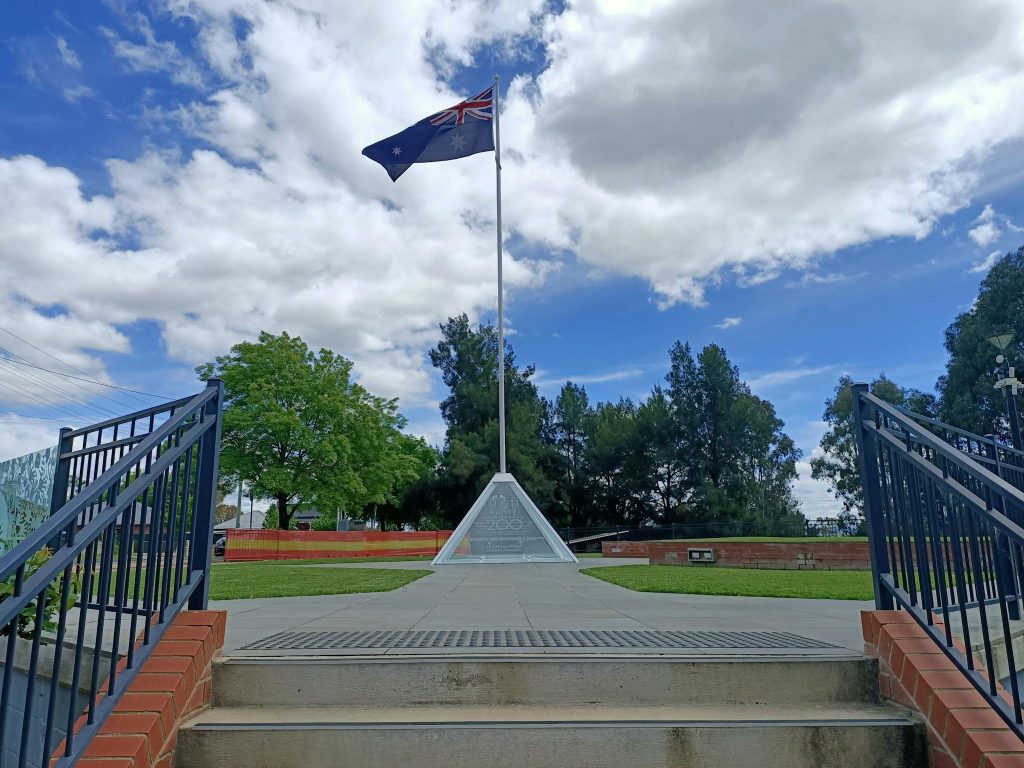
Governor Macquarie proclaimed the settlement of Bathurst on 7th 1815 – Flag Staff in mid ground
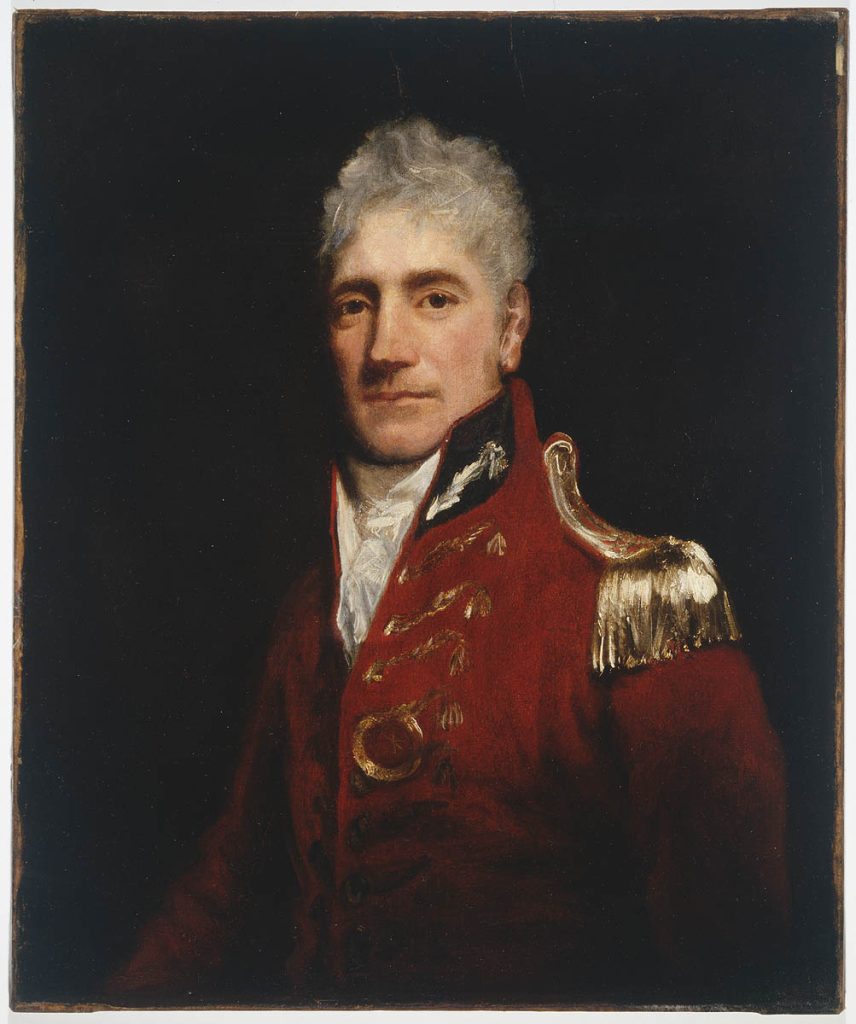
Governor Lachlan Macquarie

The two decades following the successful crossing of the Blue Mountains in 1813 mark the beginning of the inland exploration of the Australian continent. Bathurst can with good cause lay claim to being the birthplace of Australia’s inland colonial exploration.  No other settlement in inland New South Wales, or perhaps anywhere in inland Australia, has witnessed the departure of so many official expeditions in the exploration of inland Australia.

John Oxley traced the Lachlan River (1817) and Macquarie River (1818), mapping routes that would underpin pastoral expansion.

Throughout the 1820s, Bathurst functioned as a staging post. Supplies were assembled here, stock gathered, and men recruited before expeditions fanned out along river corridors and across open plains.

By the 1830s and 1840s, Bathurst had become both a symbol and a springboard. Explorers departing its inns and government offices were venturing into lands little understood by Europeans-across the Liverpool Plains, toward the Darling River, and into the semi-arid interior.
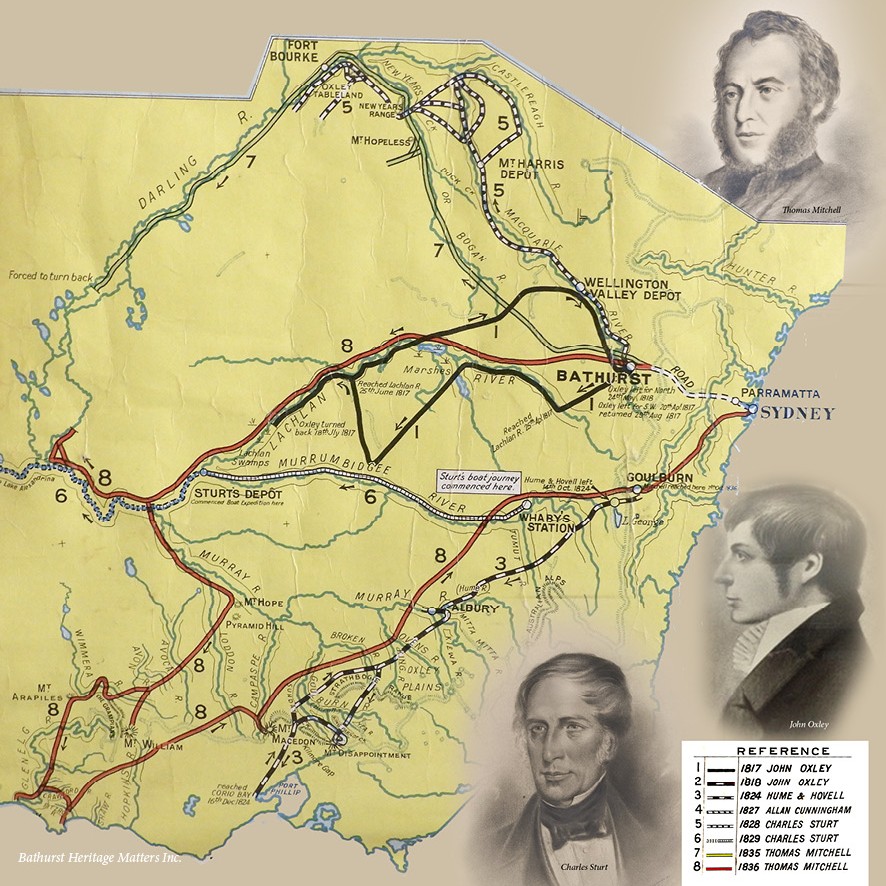
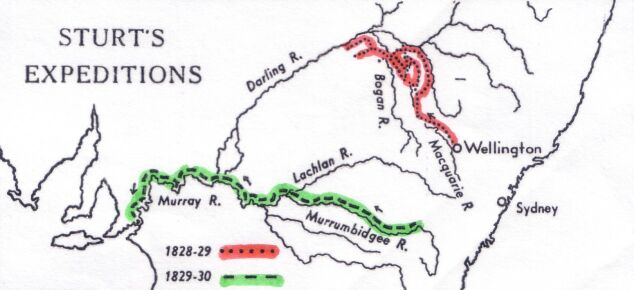
Charles Sturt passed through the district on journeys that clarified the inland river system and its connection to the Murray.

Thomas Mitchell also worked from the Bathurst frontier, refining maps and opening new grazing lands to the west, and into south east Queensland and western Victoria

The Flagstaff at Bathurst, originally erected by Governor Lachlan Macquarie on 7 May 1815, served as the fundamental reference point and origin for the surveying and mapping of inland New South Wales. 

Flag Staff on the site of Macquarie’s original Flag Staff

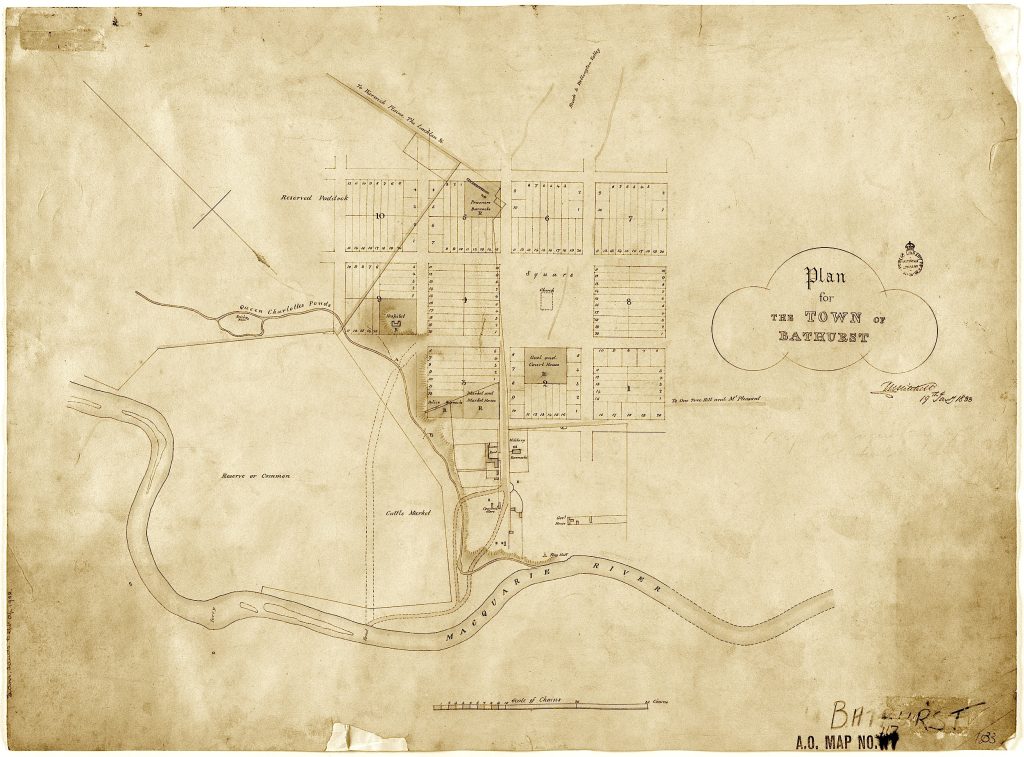
Deputy Surveyor-General, James Meehan, drew up plans for a town using the Flag Staff as his survey point.  In the 1830s, Macquarie’s Flag Staff was again used – to lay out the town we know today. 

1833 - Mitchell Town Plan of Bathurst

The town’s importance was reinforced in the 1850s when gold was discovered nearby. The gold rush brought roads, coaches, telegraph lines and a surge of population, further cementing Bathurst’s role as the inland hub of New South Wales.

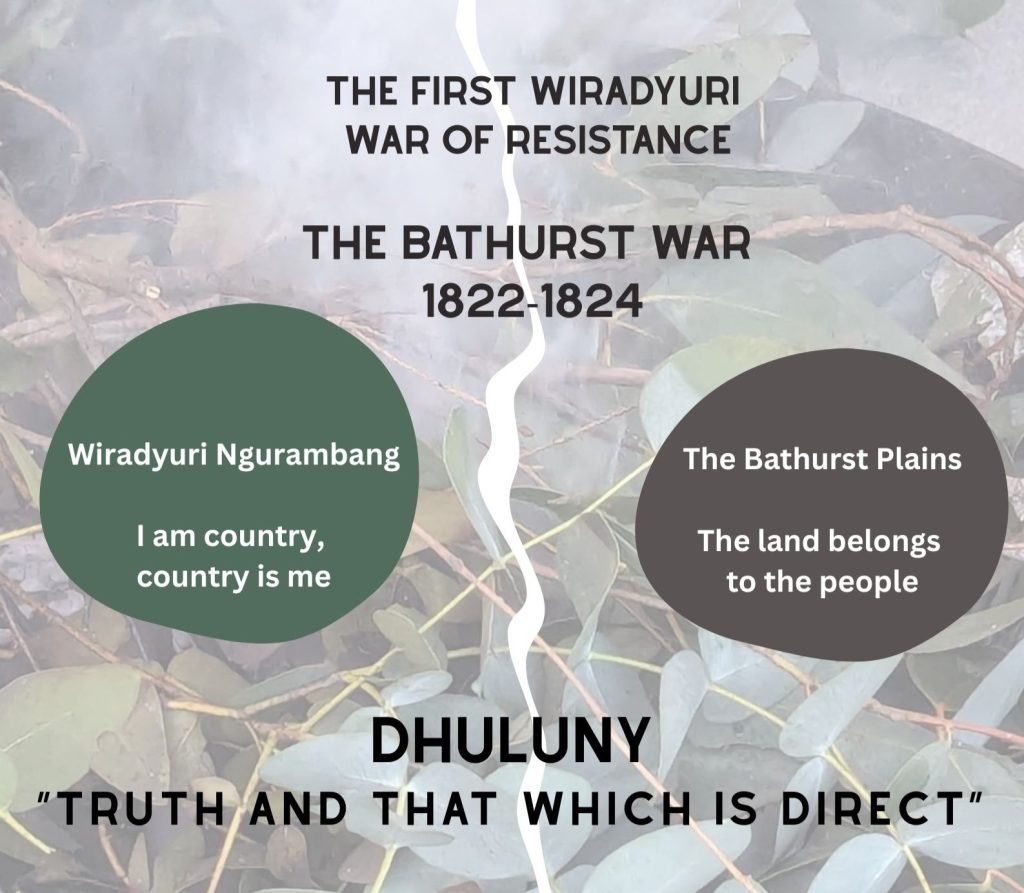
The relentless colonial expansion to the west came at immense cost to the original custodians, the Wiradyuri people. The establishment of Bathurst marked the beginning of dispossession on a large scale. Competition over land and resources led to violent conflict in the 1820s – the Bathurst War of Resistance.

For heritage travellers, Bathurst offers more than colonial architecture and sweeping plains. It is a place where the ambitions of empire met the resilience of the world’s oldest living cultures. Walking its historic streets, tracing remnants of Cox’s Road, or standing beside the Macquarie River, visitors can sense how this inland town became the launch point for journeys that reshaped a continent and forever altered the lives of its First Peoples.